The Ultimate Freelance Guide to Purchase Order vs Invoice
You land a big new client, you’re thrilled — and then their finance team emails you: “Please quote PO #4471 on your invoice before submitting.” Suddenly, the whole purchase order vs invoice question becomes very real.
You have no idea what a PO number is, the payment is now waiting on you to sort it out, and you’d rather not look like an amateur in your first week.
Purchase orders and invoices get mixed up constantly, and it’s easy to see why: they describe the same transaction from opposite ends.
But the difference is simple once you see who’s talking to whom.
A purchase order is the buyer saying, “I’d like to buy this.”
An invoice is the seller saying, “Here’s what you owe.” Knowing which is which — and how they connect — is how you get paid faster, especially by bigger clients with formal purchasing processes.
A purchase order is issued by the buyer before a purchase to request and authorize goods or services; an invoice is issued by the seller after delivery to request payment.
The purchase order comes first and sets the terms; the invoice comes last and asks to be paid, usually referencing the purchase order’s number.
That’s the short answer, but let’s fully break it down, plus exactly what it all means for a freelancer.
Quick Takeaways
- A purchase order (PO) is sent by the buyer, before delivery, to request and authorize a purchase.
- An invoice is sent by the seller, after delivery, to request payment.
- The purchase order comes first and becomes a binding contract once accepted; the invoice comes last and references the PO number.
- Most freelancers send invoices and receive POs — you rarely issue a purchase order yourself.
- If a client gives you a PO number, put it on your invoice — corporate finance teams often reject invoices without it, which delays your payment.
What is a purchase order?
A purchase order is a document the buyer sends to a seller to officially request goods or services, spelling out exactly what’s being bought, the quantities, the agreed prices, and the terms. It’s created before the work happens, and it becomes a legally binding contract once the seller accepts it.
In short, it’s the buyer’s formal “yes, let’s do this — on these terms.”
Purchase orders are usually issued by a company’s procurement or finance team, and they exist to give the buyer control: a clear, approved record of what was ordered and at what price, before any money is spent.
That’s why bigger organizations lean on them heavily — a PO is how they keep spending authorized and traceable.
Every purchase order carries a unique PO number, along with a description of the items or services, quantities, agreed prices, and delivery and payment terms.
According to Sage, once the seller accepts the PO, it becomes a binding agreement between the two parties.
What is an invoice?
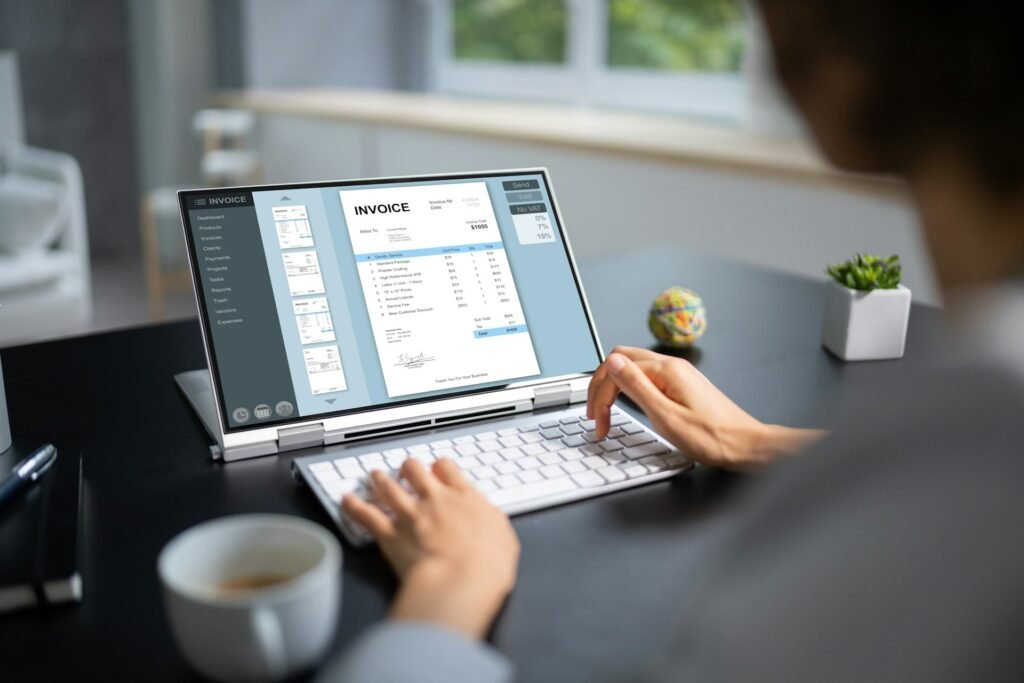
An invoice is a document the seller sends to the buyer after delivering goods or services, requesting payment. It lists what was provided, the total amount owed, the payment terms, and a unique invoice number — and it serves as the official record and legal claim for payment. It’s the seller’s “here’s what you owe, and here’s how to pay it.”
As a freelancer, this is the document you’ll live with day to day. You finish the work, then you send an invoice to get paid. It’s the last step in the transaction, not the first.
If you’re still creating invoices manually, dedicated invoicing software can automate recurring invoices, payment reminders, and expense tracking. We compared the best invoicing tools for freelancers to help you find the right option.
A complete invoice includes the items or services delivered, the amount due, the payment terms or due date, your unique invoice number, and — crucially, when there is one — the PO number the work corresponds to.
If you’re not sure how to put one together, our guide to how to invoice as a freelancer walks you through it step by step.
Purchase order vs invoice: the key differences
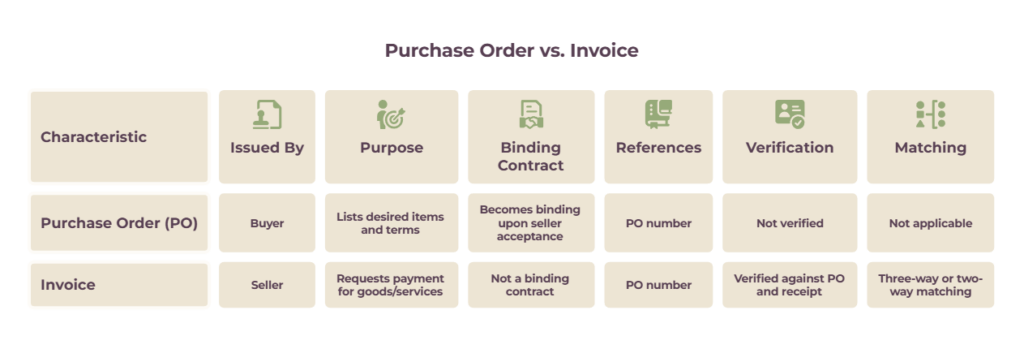
The core difference is direction and timing: a purchase order goes from buyer to seller before the work to authorize it, while an invoice goes from seller to buyer after the work to request payment. One opens the transaction; the other closes it. Here they are side by side.
| Purchase order | Invoice | |
| Who issues it | The buyer | The seller / vendor |
| When | Before delivery | After delivery |
| Purpose | Requests and authorizes a purchase | Requests payment |
| Direction | Buyer → seller | Seller → buyer |
| Key contents | Items, quantities, agreed prices, terms, PO number | Items delivered, amount owed, payment terms, invoice number, PO number |
| Reference number | PO number | Invoice number (plus the PO number) |
| Legally binding? | Yes, once accepted | A payment claim and transaction record |
| For a freelancer | You receive these | You send these |
The two rows that trip people up most: who issues it and when. Remember that the buyer always starts the process with the purchase order, and the seller always ends it with the invoice. If you can keep those two straight, the rest follows.
How a purchase order and an invoice work together
The two documents are stages in one flow: the buyer issues a purchase order, the seller accepts it and delivers, then the seller sends an invoice that references the PO number so finance can match the two and pay. The PO number is the thread that ties the whole transaction together.
Neither document replaces the other — they bookend the deal.
Here’s the typical flow:
🔵 The buyer issues a purchase order with a PO number, listing what they want and the agreed terms.
🟢 The seller accepts it, at which point the PO becomes a binding contract.
🟡 The goods or services are delivered as agreed.
🟠 The seller sends an invoice that quotes the PO number, so the buyer can tie it back to the original order.
🔴 The buyer verifies and pays.
That verification step has a name. Finance teams often run three-way matching, checking the invoice against the purchase order and a delivery receipt to make sure the quantities, prices, and terms all line up before releasing payment — a standard safeguard against overpaying or fraud, as NetSuite explains.
For services, where there’s no physical delivery to receipt, it’s usually simpler two-way matching: just the purchase order and the invoice.
Either way, the takeaway for you is the same — the numbers on your invoice need to match the PO, or payment stalls.
Do freelancers need purchase orders?
Most freelancers don’t issue purchase orders — you send invoices, and you receive POs from larger, corporate clients with formal procurement processes.
What matters is handling a client’s PO correctly: get the PO number early and put it on your invoice so you get paid without delay.
You don’t need to create purchase orders to look professional; you need to know what to do when one lands in your inbox.
How freelancers should handle purchase orders
A few practical points make all the difference:
- You send invoices; you receive POs. Small clients usually just agree the work and pay your invoice. Bigger clients route everything through purchasing, so they’ll issue you a purchase order first.
- Always put the PO number on your invoice. Corporate accounts-payable systems frequently auto-reject any invoice that doesn’t match an open PO number — and a rejected invoice means your payment goes to the back of the queue. Invoice Simple notes that this is one of the most common reasons freelancer invoices get held up.
- Ask for the PO number up front. The moment your quote is accepted or the work is commissioned, request it — don’t wait until you’re ready to invoice and then chase it, which can add days or weeks.
- A PO number gets you paid faster. When the reference is right there on your invoice, finance can match and approve it without hunting for details.
- If you’re the buyer, a simple PO can help too. If you subcontract work to another freelancer, issuing a basic purchase order sets clear expectations — though for most solo arrangements, a written agreement plus their invoice is enough.
To make the PO side effortless, most freelance billing software includes a dedicated PO-number field on the invoice template.
And since late or stalled payments are the number-one freelance cash-flow headache, it’s worth reading our guide to cash flow problems for freelancers alongside this.
The bottom line
Purchase order versus invoice comes down to one simple idea: the purchase order is the buyer’s request at the start, and the invoice is the seller’s bill at the end.
As a freelancer, you mostly live on the invoice side of that line — so the practical skill isn’t creating purchase orders; it’s handling a client’s PO number well.
Ask for it early, put it on your invoice, and you’ll skip the finance-team delays and get paid faster.
Frequently Asked Questions
What is the difference between a purchase order and an invoice?
A purchase order is sent by the buyer before a purchase to request and authorize goods or services, while an invoice is sent by the seller after delivery to request payment.
The purchase order initiates the transaction and sets the terms; the invoice closes it by requesting payment.
Who issues a purchase order and who issues an invoice?
The buyer issues the purchase order to the seller. The seller (the freelancer or vendor) issues the invoice to the buyer. As a freelancer, you’ll almost always be the one sending invoices and receiving purchase orders, not the other way around.
Which comes first, the purchase order or the invoice?
The purchase order comes first. The buyer issues it before any work is done to authorize the purchase. The invoice comes last, after the goods or services have been delivered, to request payment — and it usually references the original PO number.
Is a purchase order the same as an invoice?
No. They’re different documents at opposite ends of the same transaction. A purchase order requests and authorizes a purchase (buyer to seller, before delivery); an invoice requests payment (seller to buyer, after delivery).
A purchase order can’t be used as an invoice, and vice versa.
Do freelancers need to create purchase orders?
Usually not. Most freelancers send invoices and simply receive purchase orders from larger clients. You only need to create a PO if you’re the one buying — for example, subcontracting work — and even then, a clear written agreement is often enough for a solo setup.
What is a PO number and where does it go on an invoice?
A PO number is the unique reference a buyer assigns to a purchase order. If a client gives you one, include it clearly on your invoice — typically near the invoice number or in a dedicated “PO number” field — so their finance team can match your invoice to the original order and approve payment quickly.
Is a purchase order legally binding?
Yes. Once the seller accepts a purchase order, it becomes a legally binding contract between the buyer and seller, covering the items, quantities, prices, and terms it lists. That’s a big part of why larger organizations use POs in the first place.
Related guides: best invoicing tool for freelancers · how to invoice as a freelancer · freelance billing software · cash flow problems